


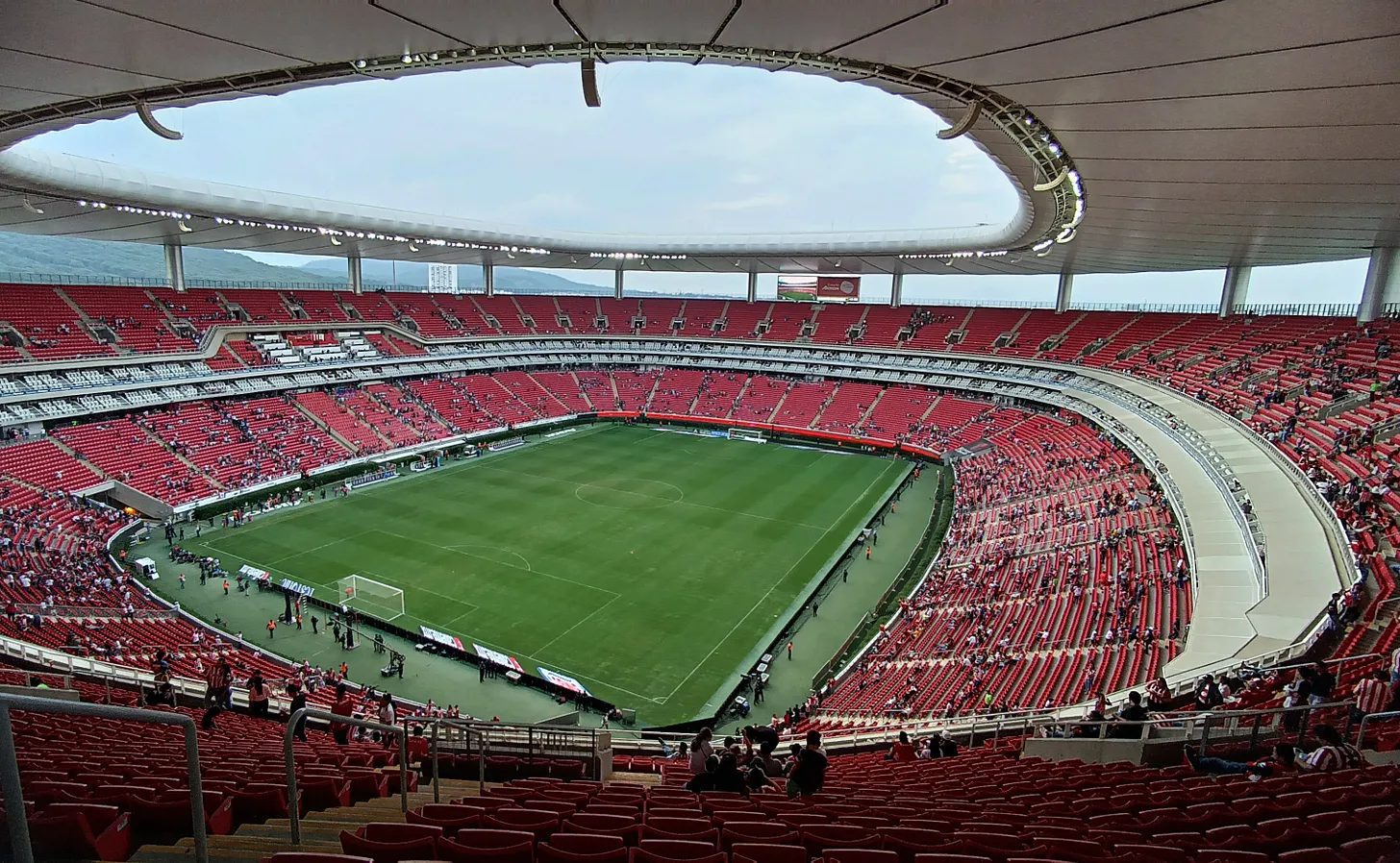
Guadalajara, one of the 2026 World Cup host cities, is facing real instability four months before it is scheduled to stage four matches at Estadio Akron.
The latest flashpoint centred on a major federal operation targeting CJNG leader Nemesio “El Mencho” Oseguera, followed by retaliation, road blockages, and public warnings that included parts of Jalisco, bringing the security conversation directly into the orbit of the tournament.
Four months before a World Cup, the key problem is that football is the easy part, while security is the thing that decides whether the event can even take place, and FIFA’s posture on this is clear enough when it’s pressed: safety is the priority, but the responsibility sits with governments, not with Zurich.
Guadalajara’s value to the tournament is clear, because it isn’t a spare venue filling gaps, it’s carrying four matches at Estadio Akron, including Mexico’s fixture against Korea Republic, plus other games that sit inside the tournament’s first phase, when fans are arriving, calibrating, and spending.
That’s why the “will they move games” question tends to be treated as taboo in official coverage, because even asking it sounds like you’re wishing instability into existence, yet the grown-up version of tournament planning is built around contingencies, and the silence usually reflects incentives and access, not certainty.
If Guadalajara’s slate were taken away, the most realistic first option is domestic reallocation inside Mexico, because Mexico City and Monterrey are already in the hosting footprint, with stadiums, operational teams, and federal-state coordination structures already set up for June.
That shift wouldn’t be simple, because Guadalajara’s fixtures aren’t just stadium bookings; they are hotel inventory, transport flows, training sites, broadcast compounds, sponsor programmes, and local-ticketing expectations, and the moment you move one element, you force renegotiation across dozens of partners who sold the idea of being in that city, not just in that country.
The second option is cross-border substitution into the US or Canada, which is technically possible given the 16-city map, but it creates political and sporting optics FIFA usually tries to avoid, because it would look like Mexico is being demoted in its own co-hosted World Cup, and it would hand a major commercial and cultural moment to markets that already have more dates, so any such move would likely require legal and governmental triggers that aren’t visible to the public.
The third option, and the one that governments prefer because it avoids admitting any loss of control, is reinforcement rather than relocation: more visible policing, tighter perimeters, harder credentialing, and a broader secure bubble around stadium routes, fan zones, and transport hubs, which mirrors the direction host governments across this tournament have been signalling through preparedness planning. The question is, is any of that enough to encourage outsiders to travel?
“The World Cup is coming” is treated like a fixed promise, while the operational reality is “the World Cup is coming if public order can be maintained at a scale that satisfies national security assessments”, and that matters because it shifts the power away from football people and into the state security department.
Guadalajara’s recent news cycle also lands differently because it’s not just headline violence, it’s the longer story of institutional pressure in Jalisco that businesses and local politics have had to navigate, including allegations of cartel-linked extortion schemes that reach into municipal power.
For fans, the emotional damage of this is obvious, because Guadalajara is not just a host city, it’s one of the few places in North American football culture where club identity is lived loudly, and a World Cup match there is meant to feel different from a match staged in a neutral corporate bowl, even if the stadium infrastructure looks similar on television.
If Jalisco stabilises, Guadalajara stays, the matches land, and the city gets a month-long surge of visitors and global attention tied to Mexico’s role as a co-host, but if the disruption continues at scale, the matches will likely be rerouted to protect the people and the product. It’ll be a huge shame for the city. I’ve been there, I’ve hung out with the people, they were warm, welcoming, and would certainly put on a good show for us.
Whatever happens, I just hope the people of Guadalajara and other parts of Mexico can stay safe and not get mixed up in the trouble.
Thanks for reading. If you hit the like button, you’ll be doing me a huge favour.
Source: David Skilling